Recycling and Sustainability at Gardening Seven Kings
 At Gardening Seven Kings we prioritise Recycling and Sustainability across every project, creating an eco-friendly waste disposal area and a thriving, sustainable rubbish gardening area for local green spaces. Our approach balances practical garden maintenance with ambitious environmental targets: we aim to divert as much material as possible from landfill and to embed a neighbourhood culture of reuse. This page explains our targets, operations, community partnerships and low-carbon transport choices that keep our gardening waste loop closed.
We recognise that local boroughs have varied collection systems, so our recycling and reuse workflows align with the Redbridge and neighbouring boroughs' approach to waste separation: dry recycling streams, food waste caddies, separate garden waste bins and residual waste collections. By working within those systems, our on-site eco-friendly waste disposal area complements municipal services and reduces contamination in mixed loads.
 Our target is bold but realistic: we are working toward a 65% recycling and reuse rate for all materials handled by Gardening Seven Kings within five years. This recycling percentage target covers compostable green waste, timber and wood from pruning, clean soil reuse, metal fixtures, plastic pots and any salvageable hard landscaping materials. Meeting this target requires careful sorting, trained volunteers, and clear signage in the sustainable rubbish gardening area.
To support these aims we operate a designated sustainable rubbish gardening area at our main hub where materials are separated into clear streams. The area is designed to be accessible and secure, with covered bays for green waste, a dry-storage shed for reusable containers, and a small reuse workshop to repair and repurpose tools and pots. We apply simple best-practice separation so that borough-level kerbside rules are mirrored on-site: glass and cans kept apart from mixed dry recyclables, food and compostable garden cuttings in a bio-bin, and clear labelling to avoid cross-contamination.
Our green waste becomes a centrepiece of our circular gardening model. Collected prunings, leaves and lawn cuttings are processed through a combination of in-house composting and local transfer stations operated by the council. We actively use local transfer stations and materials recycling facilities in the area to ensure bulky or contaminated loads are handled correctly, and to recover materials that our site cannot process.
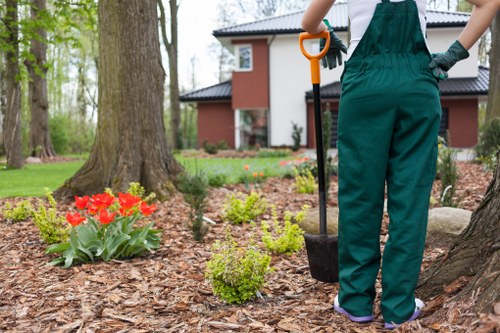 We also run a small network of swap bays where clean pots, reclaimed bricks, paving slabs and timber are available for community gardeners. This reuse hub reduces demand for virgin materials and helps achieve the recycling & sustainability plan we advocate. Strong record-keeping ensures that diverted materials count toward our recycling percentage target and supports transparent reporting to local partners.
Partnerships with charities are central to our model. We work with local environmental and social charities, community allotments, food banks and reuse organisations to distribute usable materials and share compost. These partnerships amplify impact: surplus soil and compost feed community food-growing projects, usable tools and pots supply volunteer-led beds, and non-toxic timber is reused by social enterprises. By collaborating we expand the reach of our sustainable waste gardening area without creating excess stockpiles.
Key activities we support include:
- Green waste composting—turning prunings and leaves into rich compost for community beds;
- Reuse exchange—a system of donating and receiving pots, tools and reclaimed materials;
- Material salvage—recovering metals, timber and hard landscaping for partner projects.
These activities echo the boroughs' emphasis on waste separation and local reuse: when the public sorts materials correctly at the kerbside, the ecosystem of community recycling and sustainability can work efficiently.
Transport is a major part of our carbon footprint, so we are shifting to low-impact logistics. Gardening Seven Kings now deploys a fleet of low-carbon vans—primarily electric light vans and plug-in hybrids—alongside pedal-assist cargo bikes for short trips and small loads. These choices reduce emissions for collections and transfers between our hub and local transfer stations. Where heavier loads are unavoidable, we consolidate trips and schedule loads to minimise mileage, aligning with our commitment to a low-carbon garden recycling network.
 Training and community education are woven through operations: volunteers learn correct separation, compost management and safe reuse practices so the sustainable rubbish gardening area remains effective. Regular signage uses simple icons and colours to reflect borough collection categories — for example, separate bins for food waste, garden waste and dry recyclables — reducing confusion and contamination while supporting higher recycling yields.
 Monitoring and continuous improvement are vital. We track tonnage by stream, contamination rates, the percentage of materials diverted from landfill, and emissions from transport. This data informs practical targets and helps us refine partnerships with charities and local facilities. Our transparent measurements help local stakeholders see progress toward the recycling percentage target and understand how an integrated, community-focused Recycling and Sustainability strategy can create resilient, green neighbourhoods.
Ultimately Gardening Seven Kings aims to be a practical model of urban garden circularity: a living example of an eco-friendly waste disposal area and a replicable sustainable rubbish gardening area that others can adapt. By combining clear targets, use of local transfer stations, collaborative charity partnerships and low-carbon vans, we turn garden waste into resources, cut emissions, and strengthen community green spaces. Join us in supporting a greener Seven Kings where waste is a resource and sustainability is part of every planting plan.
Why this matters
Recycling and sustainability are not just policy words — they are practical actions affecting soil health, biodiversity and local air quality. Our integrated approach reduces landfill, supports local charities, and lowers transport emissions with electric vehicles, all while enhancing the productivity of community gardens.
Core commitments
Gardening Seven Kings is committed to: achieving 65% diversion of garden and related materials, maintaining a clearly managed eco-friendly disposal area, partnering with charities for reuse, and using low-carbon vans to limit transport emissions. Together these measures deliver measurable environmental and social benefits to the area.